Guide
Getting started with nail standing
What it is, why people practise, and how your first time on the board goes.
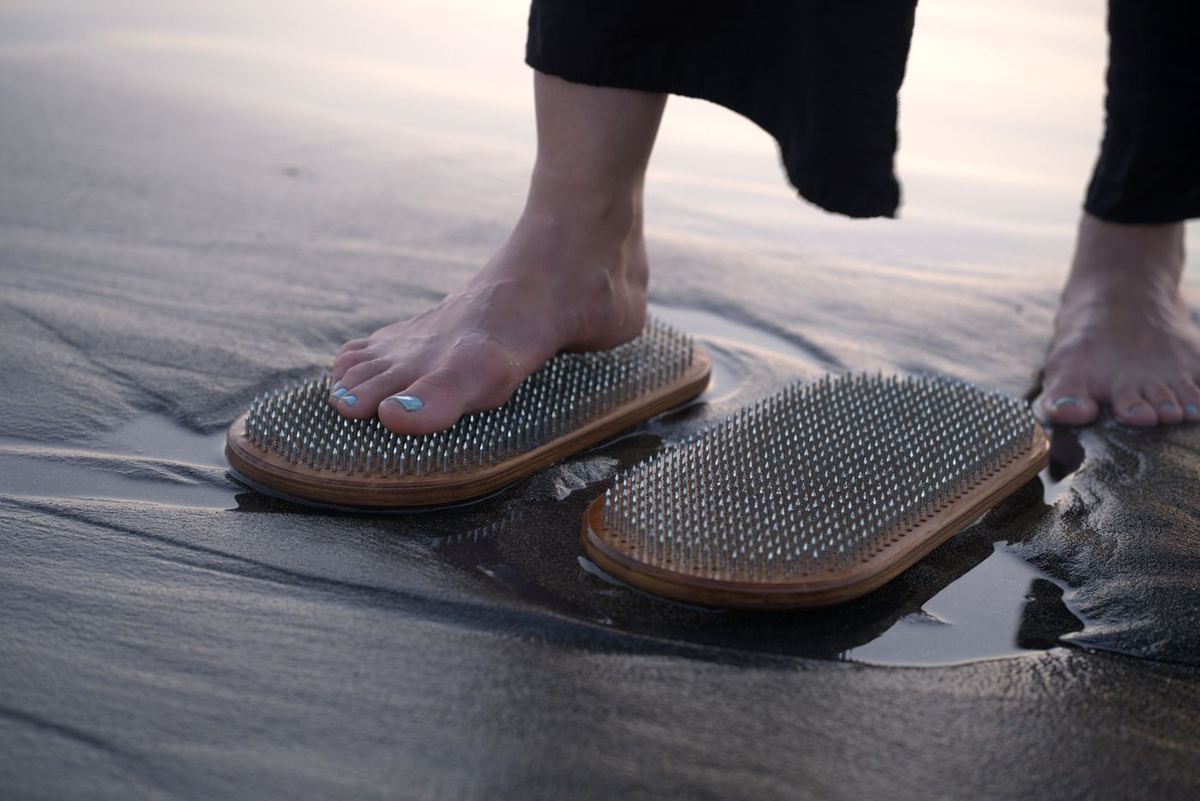
What is nail standing?
Standing barefoot on a board covered in nails. Not exactly new: the first nail boards appeared more than 2,000 years ago in India, where yogis already called them "Sadhu boards". The practice also relates to acupressure and reflexology, used for centuries in traditional Chinese medicine.
The nails don't pierce the skin. There are many of them, all the same height, and your weight is spread across them.
Why practise
Body
There are around 70,000 nerve endings in the soles of your feet. In Eastern traditions they correspond to points linked to different areas of the body. Standing on the board stimulates them all at once.
Mind
The board is an active meditation. Your attention can't wander off, so it comes back to the here and now. It's often easier than sitting still with your eyes closed.
Emotions
The first minutes can bring up fear, resistance, sometimes emotion. You learn to stay with an intense sensation without running or tensing up, until it shifts.
Energy
Many practitioners describe a boost of energy after a session, and like to set an intention before stepping on.
Your first session, step by step
Prepare your space
Place both boards side by side on a stable floor, near a wall or chair to hold on to.
Breathe
A few slow breaths before you begin. Set an intention if you wish.
Step on slowly
One foot, then the other. Shift your weight gradually. Socks are fine at first.
Stay and breathe
The intensity rises. Keep breathing slowly and deeply, eyes on a point in front of you.
Get through the peak
Around 4 to 6 minutes, the sensations change on their own and calm arrives.
Step off gently
One foot at a time, never jump. Take a moment to feel. Close the board.
How long, how often?
There's no perfect duration. What matters is staying through the strong sensations, because that's where it all happens: about 4 to 6 minutes. Past that point, a calm phase arrives.
After that, even one minute is enough on busy days. Regular practice brings the deepest effects, but now and then is better than never. Listen to your body rather than a timer.
What will I feel?
The first minutes are often surprising. Tingling, warmth, the urge to step off: that's normal, it's part of the path. Breathe, stay a little longer, and the sensation usually changes on its own. Some people are comfortable on the first try, others need several sessions.
Socks or barefoot?
Socks help you get used to the sensation at first. Most people go barefoot once they're used to it.
Precautions
Ready for your first time?
On your own with the starter guide, or guided by Ann.